
E Bike Commute Savings How Much Can You Save by Ditching the Car
A daily car commute feels ordinary until the costs are added up. Gas, oil changes, tires, parking, insurance, tolls, repairs, and depreciation can turn a “paid off” car into a monthly bill hiding in plain sight.
An e-bike does not work for every commute. Distance, weather, road safety, storage, and family schedules all matter. But for many people with a commute under 10 miles each way, swapping even a few car trips per week for an e-bike can save real money.
This guide breaks down where the savings come from, what an e-bike really costs, and how long it can take to earn back the upfront investment. The numbers below are illustrative, not financial advice, but they show why the switch is getting harder to ignore.
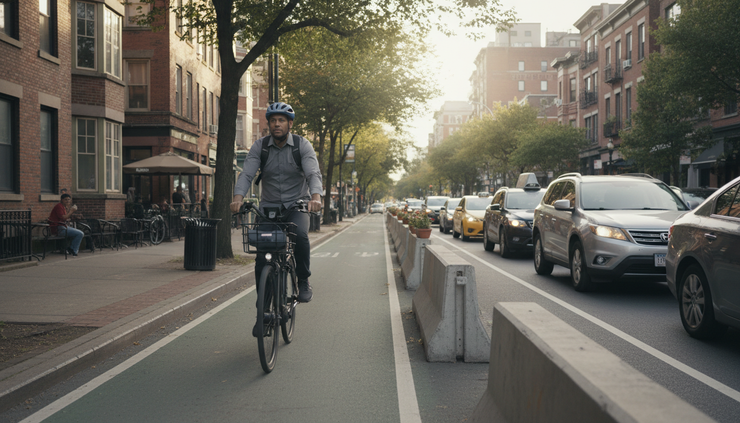
The basic math behind an e-bike commute
The biggest savings come from replacing short, repeated car trips. A 6-mile drive may not feel expensive, but doing it twice a day, five days a week, all year, adds up quickly.
Here is a common example:
Commute factor | Example assumption |
Round-trip commute | 20 miles |
Commute days per week | 5 |
Work weeks per year | 48 |
Annual commute miles | 4,800 |
Car fuel economy | 25 mpg |
Gas price | $3.50 per gallon |
In this example, the commute alone uses about 192 gallons of gas per year.
That equals $672 per year in fuel.
That is just gasoline. It does not include maintenance, parking, tolls, registration, insurance, or the wear that reduces a car’s value over time.
An e-bike uses electricity instead of gas. Charging costs vary by battery size and local electricity rates, but most riders spend only a small amount per month charging at home. For many commuters, annual electricity cost lands around $10 to $30.
That gap is why the savings can show up faster than expected.
Where the savings actually come from
Fuel is the easiest cost to see, but it is not always the largest. Maintenance and parking can matter just as much, especially in cities, downtown areas, campuses, hospitals, and dense neighborhoods.
Fuel savings
Using the 20-mile round-trip example:
Item | Car commute | E-bike commute |
Annual commute miles | 4,800 | 4,800 |
Energy source | Gasoline | Electricity |
Estimated annual energy cost | $672 | $10 to $30 |
Estimated annual savings | $642 to $662 |
Fuel savings get bigger when gas prices rise, when the car gets lower mileage, or when the commute is longer.
Here is how the annual fuel cost changes by commute length, using $3.50 per gallon and 25 mpg:
Round-trip commute | Annual commute miles | Estimated gas cost |
10 miles | 2,400 | $336 |
20 miles | 4,800 | $672 |
30 miles | 7,200 | $1,008 |
A longer ride is not realistic for everyone, but many e-bike riders find that 5 to 10 miles each way is manageable because the motor reduces the hard parts: hills, headwinds, and arriving sweaty.
Maintenance savings
Cars are expensive to keep moving. Even if nothing major breaks, every mile adds wear to tires, brakes, fluids, suspension parts, belts, and the drivetrain.
An e-bike also needs care, but the scale is different. Tires, brake pads, chains, tune-ups, and occasional battery-related costs are usually much cheaper than car maintenance.
For a commuter replacing 4,800 car miles per year, a conservative estimate might look like this:
Maintenance category | Car estimate | E-bike estimate |
Routine service | $250 to $500 | $75 to $200 |
Tires and brakes allocation | $150 to $350 | $50 to $150 |
Unexpected repairs allocation | $250 to $600 | $50 to $200 |
Estimated annual total | $650 to $1,450 | $175 to $550 |
That points to a potential maintenance savings of $475 to $900 per year.
The exact number depends on the car. An older SUV with aging parts may cost far more. A newer compact car under warranty may cost less. The e-bike will also cost more to maintain if ridden hard in rain, stored outdoors, or used for heavy cargo.
Still, every car mile avoided delays the next tire replacement, oil change, brake job, and repair visit.
Parking savings
Parking is where the financial case can go from “nice” to “obvious.”
Some commuters park free at home and at work. Others pay daily, monthly, or by the hour. Downtown garages and commuter lots can easily cost more than fuel.
Here are a few realistic parking scenarios:
Parking situation | Estimated cost | Annual cost over 48 work weeks |
Free parking | $0 | $0 |
Low-cost lot | $5 per day | $1,200 |
City garage | $12 per day | $2,880 |
Monthly parking pass | $150 per month | $1,800 |
If an e-bike allows a rider to avoid paid parking, the payback period can shrink dramatically. Even replacing three driving days per week can save hundreds or thousands per year.

What the first-year cost of an e-bike looks like
The upfront price is the main reason many people hesitate. A reliable commuter e-bike is not a toy, and the cheapest option is not always the best value.
A practical commuter setup often includes more than the bike itself.
Item | Typical cost range |
Commuter e-bike | $1,500 to $3,500 |
Helmet | $50 to $150 |
Lock | $75 to $200 |
Lights if not included | $30 to $100 |
Fenders and rack if not included | $75 to $200 |
Pannier or cargo bag | $50 to $200 |
Rain gear or cold-weather gear | $75 to $250 |
First-year tune-up and small parts | $100 to $250 |
A reasonable first-year setup often falls between $2,000 and $4,500.
That is a wide range. A rider with secure indoor storage, included lights and fenders, and mild weather may spend less. A rider who needs a cargo e-bike, heavy-duty lock, studded winter tires, or waterproof gear may spend more.
There are also ways to lower the upfront cost:
Buy last year’s model from a reputable shop.
Look for local e-bike rebates where available.
Use a regular bike for part of the commute and add transit.
Start with two or three e-bike commute days per week.
Choose a bike that uses standard parts a local shop can service.
Financing can make payments easier, but interest changes the math. The cleanest savings come from buying within budget and riding often enough to replace real car miles.
How long does it take to recoup the cost?
The payback period is the e-bike cost divided by annual savings. The more car costs the e-bike replaces, the faster it pays for itself.
Let’s use a midrange commuter setup:
E-bike and gear $2,800
Annual electricity $20
Annual e-bike maintenance $300
Now compare it with three car-commute situations.
Scenario | Fuel savings | Maintenance savings | Parking savings | Net annual savings after e-bike upkeep | Payback time |
Free parking, short commute | $336 | $350 | $0 | About $366 | 7.7 years |
Free parking, moderate commute | $672 | $650 | $0 | About $1,002 | 2.8 years |
Paid parking, moderate commute | $672 | $650 | $1,200 | About $2,202 | 1.3 years |
Downtown parking, moderate commute | $672 | $650 | $2,880 | About $3,882 | Under 1 year |
The big lesson is simple: parking changes everything.
If parking is free and the commute is short, an e-bike may still save money, but the payback may take years. If parking costs $5 to $12 per workday, the bike can pay for itself much faster.
There is another layer too. Some households find that an e-bike lets them delay replacing a second car, use one car less, or eventually become a one-car household. That can bring much larger savings through lower insurance, registration, loan payments, and depreciation. Those numbers vary too much to treat as automatic, but they can be meaningful.

Three commuter case studies with real-world style numbers
The following examples are anonymized, practical commuter scenarios. They use common U.S. cost ranges and show how the math changes based on distance and parking. The names are fictional, but the situations reflect choices many riders make when moving from car commuting to e-biking.
Maya replaces a short neighborhood commute
Maya lives 3 miles from work. Driving takes 12 minutes on a good day and 20 minutes when school traffic backs up. Parking is free, and her small sedan gets good mileage.
Her numbers:
Cost area | Annual savings estimate |
Fuel | $200 |
Maintenance wear | $250 |
Parking | $0 |
Gross savings | $450 |
E-bike upkeep and charging | $175 |
Net annual savings | $275 |
Maya buys a $1,700 e-bike and spends $300 on a helmet, lock, rack bag, and rain jacket. Her total setup is $2,000.
At $275 per year in net savings, her payback period is about 7.3 years.
That may not sound exciting, but Maya still values the switch. She gets light exercise, avoids traffic stress, and uses the e-bike for errands. Once grocery runs and weekend trips replace more car miles, her savings improve.
Best fit: short trips, lifestyle benefits, low parking cost.
Jordan avoids paid parking three days a week
Jordan has an 8-mile one-way commute to a hospital district. Parking costs $8 per day. The route includes a long hill, so a regular bike felt too hard. An e-bike made the ride doable.
Jordan starts by riding three days per week and driving two days.
Cost area | Annual savings estimate |
Fuel | $320 |
Maintenance wear | $400 |
Parking | $1,152 |
Gross savings | $1,872 |
E-bike upkeep and charging | $275 |
Net annual savings | $1,597 |
Jordan buys a commuter e-bike for $2,400 and spends $500 on gear. Total cost is $2,900.
At $1,597 in annual savings, the payback period is about 1.8 years.
This is where e-bike commute savings become easy to see. Jordan does not need to ride every day. Avoiding paid parking three times a week does most of the work.
Best fit: moderate distance, paid parking, consistent schedule.
Luis and Ana delay buying a second car
Luis and Ana share one car. When Ana’s job moved closer to home, they considered buying a second used car. Instead, Ana tested an e-bike for a 6-mile commute.
Their avoided costs were bigger than fuel alone. A second car would have added insurance, registration, maintenance, repairs, and likely a monthly payment.
They spent $3,600 on a cargo-capable e-bike and accessories.
They estimated the avoided second-car cost at several thousand dollars per year, even with occasional ride-hailing, transit fares, and extra maintenance for the e-bike.
Their payback period was likely under one year compared with buying and operating another car.
Best fit: two-adult household, short to moderate commute, ability to share one vehicle.

Costs that riders sometimes forget
The e-bike is not free after purchase. Planning for these costs makes the savings estimate more honest.
Battery replacement
A quality e-bike battery can last for years, but it will not last forever. Replacement cost varies by brand and size. Treat the battery as a long-term wear item and avoid storing it in extreme heat or cold.
Theft prevention
A strong lock is not optional. Many riders use a high-quality U-lock or chain, sometimes with a second lock. Secure storage at home and work matters as much as the lock itself.
Weather gear
A commute that works only on perfect days will replace fewer car miles. Fenders, rain pants, gloves, lights, and reflective gear can increase the number of rideable days.
Insurance
Some homeowners or renters policies may offer limited coverage, but exclusions are common. Separate e-bike insurance may make sense for higher-value bikes. Read the policy details before assuming the bike is covered.
Route comfort
The safest route may not be the shortest route. A slightly longer path with bike lanes, lower traffic speeds, or trails can make the habit easier to keep.
When an e-bike saves the most money
The financial case is strongest when several of these are true:
The commute is under 10 miles each way.
Parking costs money.
Gas prices are high.
The car has poor fuel economy.
The route has safe bike lanes, trails, or quiet streets.
The rider can store the e-bike securely.
The e-bike also replaces errands, school drop-offs, or short weekend trips.
A household can delay buying another car.
The case is weaker when parking is free, the commute is very short, the bike cannot be stored safely, or the route feels unsafe. In those cases, the e-bike may still be worth it for fitness, convenience, or environmental reasons, but the payback may take longer.

How to run your own payback calculation
A personal estimate takes about 10 minutes.
Use this simple formula:
Annual car commute cost avoided minus annual e-bike cost equals annual net savings.
Then:
E-bike setup cost divided by annual net savings equals payback period in years.
Gather these numbers:
Number to estimate | How to find it |
Annual commute miles | Round-trip miles x commute days x work weeks |
Fuel cost | Annual miles ÷ mpg x gas price |
Parking cost | Daily parking x commute days |
Maintenance wear | Use a conservative annual estimate based on your car’s age and mileage |
E-bike upkeep | Include charging, tune-ups, tires, brake pads, and small parts |
Setup cost | Bike, helmet, lock, bags, lights, fenders, and weather gear |
For a quick estimate, start with one version where the e-bike replaces every commute day, then another where it replaces two or three days per week. Many people build the habit gradually, and partial replacement can still save real money.
The takeaway on e-bike commute savings
Ditching the car for an e-bike does not have to mean selling the car or riding through every storm. The most realistic path is often replacing the easiest trips first: sunny commute days, downtown parking days, quick errands, and short solo drives.
For a moderate commute with free parking, an e-bike might pay for itself in two to four years. With paid parking, the payback can fall near one year or less. If it helps a household avoid a second car, the savings can be far larger.
The best next step is simple: calculate one week of car commuting costs, then test the route by bike on a low-pressure day. If the ride feels practical, the money may start making sense very quickly.


Comments